PODCAST HIGHLIGHT GUIDE
Choose podcast highlights that make sense outside the episode.
A memorable sentence is not automatically a useful short. The best podcast highlights help a new viewer enter the conversation, follow one complete idea, and leave with a clear insight, story, or question.
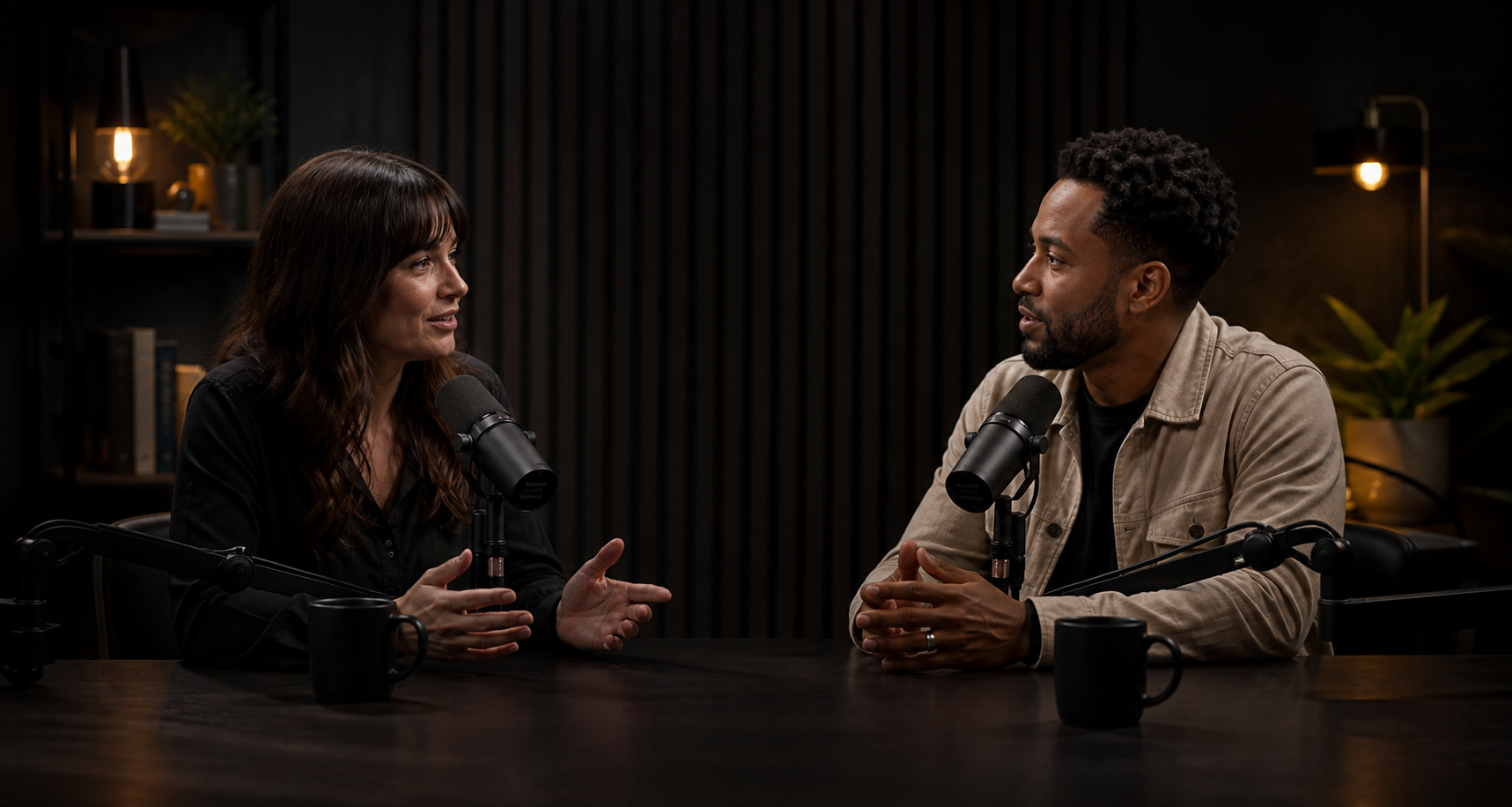
Use a repeatable editorial rubric to compare candidates for clarity, specificity, hook quality, structure, natural audio boundaries, theme variety, and fairness to the original conversation.
- No-context clarity
- Candidate scoring
- Theme diversity
Start with the listener who has no episode context
Regular listeners already know the hosts, guest, and topic. A discovery viewer may know none of them. Read or watch the candidate without the episode title and ask whether the subject becomes clear in the opening lines.
If the answer begins with a pronoun, unexplained name, or response to an invisible question, widen the range. A small amount of orientation can turn a confusing quote into a complete invitation.
- Subject is identifiable
- Necessary question included
- No private show knowledge required
Look for the beginning, middle, and end of one idea
A strong moment usually establishes direction, develops the thought with a reason or example, and reaches a payoff. These parts may be brief, but the viewer should feel that something changed or resolved by the final line.
Avoid excerpts that are only setup or only conclusion. A powerful ending without its premise can misrepresent the guest; a promising opening without resolution feels like an accidental cut.
- Directed opening
- Useful development
- Resolved payoff
Distinguish a real hook from empty intensity
A hook is useful when it creates a specific expectation the clip can fulfill. It may present a surprising fact, meaningful disagreement, vivid problem, or practical benefit. Volume, outrage, and exaggerated language are not substitutes for a clear subject.
Score the opening by what it helps the viewer understand, not simply by emotional energy. The most dramatic sentence may belong in the middle if it depends on the reasoning before it.
- Specific expectation
- Promise fulfilled
- No manufactured drama
Prefer specificity over generic motivation
Concrete moments travel better because a new viewer can recognize what they are about. A named decision, detailed mistake, practical example, or clear contrast usually offers more value than a broad statement about success or resilience.
Ask whether the candidate contains language that could apply to almost any episode. If so, look for the example, condition, or consequence that makes this conversation distinctive.
- Concrete detail
- Recognizable consequence
- Distinctive perspective
Keep questions and qualifications when accuracy needs them
The host’s question may define the scope of an answer, especially when the response begins with ‘yes,’ ‘that,’ or a numbered point. Keep only the part needed for orientation, but do not remove it merely to save seconds.
Likewise, preserve words such as ‘sometimes,’ ‘in our case,’ or ‘based on the data we saw.’ Removing a qualification can turn a careful observation into a universal claim the guest never made.
- Question context
- Meaningful uncertainty
- Fair representation
Compare themes across the whole episode
Label each candidate with its central subject and viewer value. When several ranges express the same lesson, retain the version with the clearest opening, strongest example, and cleanest ending.
Use remaining slots for genuinely different ideas rather than alternative wording. Returning fewer clips is correct when the episode does not contain enough distinct moments.
- Theme labels
- Best version retained
- No quota padding
Score candidates with a simple editorial rubric
Rate each moment for orientation, hook, specificity, completeness, natural delivery, visual viability, and distinction from the rest of the set. A five-point scale is enough if every score has a written reason.
Treat the total as a comparison aid, not an automatic publishing decision. A high-scoring moment can still fail because of rights, sensitive context, an unusable crop, or a title that overstates the conversation.
- Consistent criteria
- Written selection reason
- Human approval remains final
Set boundaries by listening, not only reading
Transcripts make a long episode searchable, but spoken rhythm reveals breaths, interruptions, laughter, overlap, and emphasis. Listen beyond each proposed cut to understand whether the thought has actually begun and ended.
Avoid clipping consonants, removing the breath before an important line, or ending while room tone and body language still signal continuation. Natural audio boundaries help the short feel intentional.
- Full-speed listening
- Natural entry and exit
- Delivery preserved
Run a final no-context review
Watch the exported clip without reading the show notes. Confirm the subject, opening promise, central point, ending, title, captions, crop, and source audio. Then compare it with the episode to ensure the short still represents the speaker fairly.
Review the full candidate set for repeated themes and identical openings. Publish only the moments that add distinct value and remain coherent as independent videos.
- First-time viewer test
- Source meaning protected
- Set-level comparison
SELECTION QUESTIONS
How should podcast candidates be compared before editing?
Is the most emotional quote always the best highlight?
No. Emotion helps only when the viewer can understand its subject, development, and consequence without missing episode context.
How many themes should one episode produce?
There is no required number. Keep the strongest distinct themes and return fewer clips when the remaining candidates repeat or depend on missing context.
Can a question be part of the final clip?
Yes. Include the smallest useful question when it establishes the scope or makes the answer understandable.
Should the transcript decide exact boundaries?
Use it to locate candidates, then listen and watch the source. Spoken rhythm and visual continuity often require small boundary changes.
Have an episode with too many possible highlights?
Create a job, compare the selected themes, and approve only the moments that work without the surrounding hour.
Create your clips