PODCAST CLIP MAKER
Turn long podcast conversations into clips worth sharing.
A strong podcast clip is a compact conversation arc, not an isolated quote. It gives a new viewer enough orientation, reaches a specific insight or story, and ends without sending them back to missing context.
Create your clips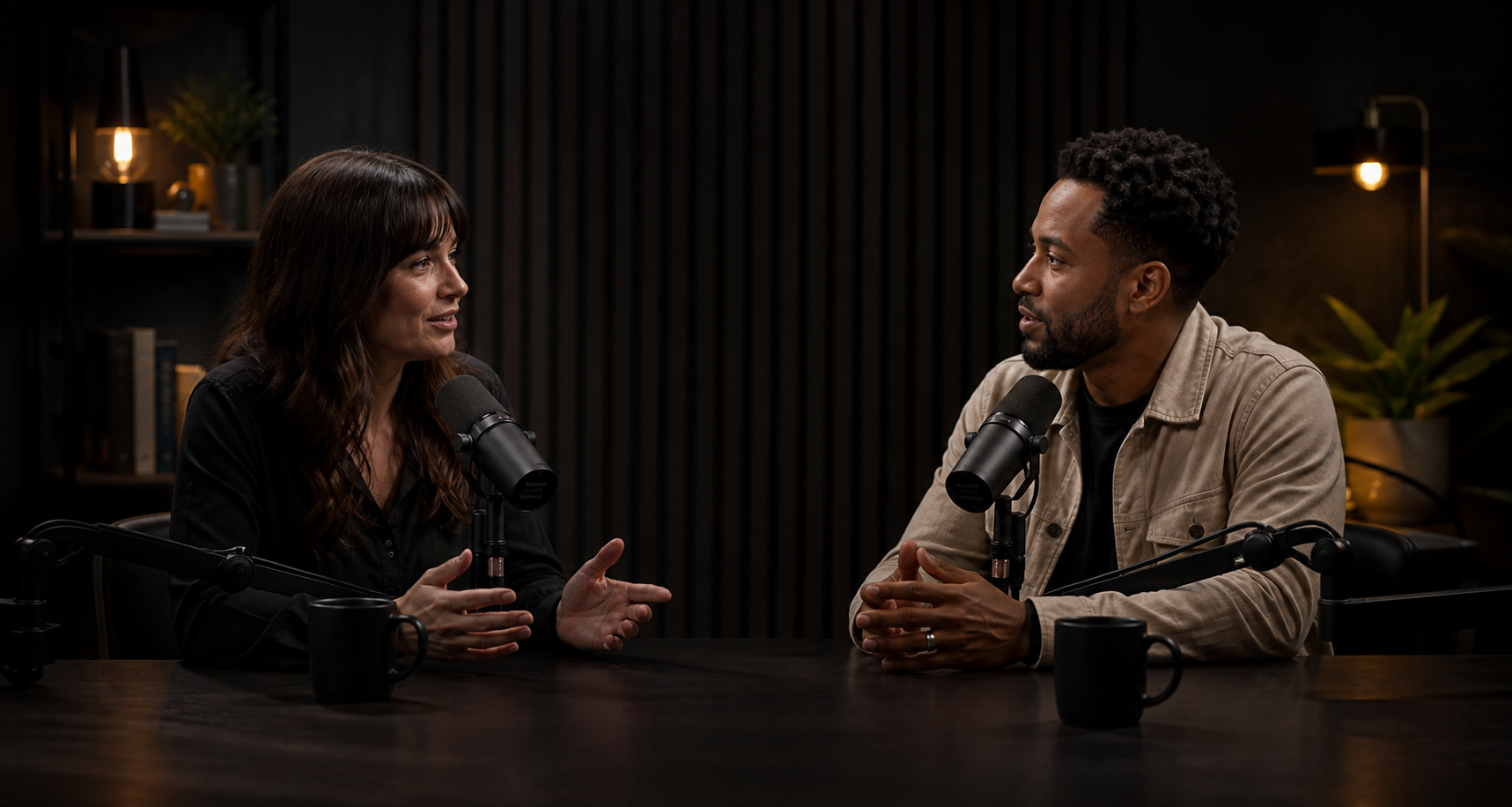
Timestamped speech can narrow a long episode to promising ranges, but editorial quality still comes from comparing complete ideas, listening for natural boundaries, protecting the speakers’ meaning, and reviewing the finished vertical video.
- Complete conversation arcs
- Varied highlight themes
- Natural spoken endings
Judge every moment as a first-time listener
Regular listeners know the hosts, the guest, and the episode topic. A short-form viewer may know none of them. The opening therefore needs to identify the subject quickly enough that the next sentence has meaning. A compelling line that depends on an earlier story is not yet a complete clip.
Watch or read the candidate without the episode title or show notes. If a reasonable viewer cannot explain who or what the speaker is discussing, widen the opening or choose a different passage. Orientation should be concise, but it cannot be optional.
- No-context comprehension
- Clear subject
- Minimal necessary setup
Look for a beginning, development, and payoff
Useful podcast highlights often follow a small arc: a question creates direction, the speaker develops one idea with a reason or example, and a final line resolves it. The arc may be advice, a surprising explanation, a personal story, or a clear disagreement. What matters is that the clip changes or completes something for the viewer.
Avoid cutting immediately after the most quotable sentence if the speaker is still qualifying the claim. Likewise, do not keep a long lead-in simply because it occurred before the payoff. Boundaries should preserve the smallest complete version of the idea.
- Directed opening
- Specific development
- Resolved ending
Build a varied set instead of repeating the episode thesis
One episode can repeat its central argument in several forms. Selecting every version creates a batch that feels larger but offers little editorial choice. Compare candidates by theme and keep the clearest expression of each idea rather than several near-duplicates.
A balanced set might include a practical lesson, a counterintuitive belief, a personal turning point, and a memorable disagreement. Variety should come from the conversation itself; do not manufacture categories when the source contains only one or two publishable ideas.
- Theme-level comparison
- Different viewer value
- Fewer strong clips when needed
Protect questions, pauses, and conversational meaning
A host’s question may be essential when the answer begins with words such as ‘yes,’ ‘that,’ or ‘the second reason.’ Keep the smallest part of the question that makes the response understandable. Pauses, laughter, and hesitation can also carry tone, so trimming every silence may make an honest exchange feel unnaturally scripted.
Caption cleanup should remove reading friction without rewriting the guest. Preserve uncertainty, disagreement, names, numbers, and technical terms. If a smoother caption would change the force of the statement, accuracy wins.
- Question context when required
- Natural delivery
- Meaning-preserving captions
Compose multi-speaker footage for a vertical frame
Horizontal podcast video often includes two people, microphones, and studio space. A 9:16 crop has much less room, especially when the camera switches between a wide shot and individual speakers. Keep the active person visible and leave a stable central area for captions.
Review the complete rendered clip for camera changes, reactions, or gestures that move outside the crop. Caption placement should avoid faces and common interface overlays. The goal is a calm composition that supports the conversation, not constant reframing that competes with it.
- Active speaker remains visible
- Caption-safe composition
- Full-clip crop review
Plan a release rhythm around distinct reasons to watch
A podcast episode can support discovery over several days or weeks when each clip promises something different. Pair every approved moment with post copy that introduces the specific value instead of repeating the on-screen caption word for word.
Before publication, watch the final file without episode context, compare captions with the audio, confirm the ending lands, and check that the title represents the exchange fairly. The full episode remains the authoritative source; short clips should invite interest without misrepresenting it.
- Sustainable cadence
- Specific post promise
- Final fairness review
PODCAST QUESTIONS
What makes a podcast moment ready to leave the episode?
How long should a podcast clip be?
Long enough to establish one idea and reach its payoff. Twenty to forty-five seconds is a useful preference, but a clean eight-second insight or a complete answer under sixty seconds can also work.
Should the host’s question stay in the clip?
Keep it when the answer depends on the wording or begins without enough orientation. Remove it only when the response clearly establishes the topic on its own.
How many clips should one episode produce?
Only as many as the episode contains distinct, high-confidence ideas. A smaller varied set is more useful than several versions of the same thesis.
How should a two-person podcast be framed vertically?
Keep the active speaker readable, leave room for captions, and review every camera change. Wide compositions and reaction shots often need more attention than a single talking head.
Ready to find the complete ideas inside your next episode?
Upload an authorized podcast video or provide a public direct MP4, then review each finished moment in context.
Create your clips